What to Order at a Wine Bar (Not Drinking) + NA Beer & Wine Guide
Last updated: November 7, 2026
Wine bars used to feel like the one place I had to skip. Cheese boards, tiny tables, everyone swirling something pale and fancy. Then I learned the secret: you don’t need a pour of wine. You need a glass that looks like you belong, a few lines that are easy to say, and a clear read on what “non-alcoholic” actually means on the label.
This is my full wine-bar playbook: the exact words to say, scannable orders that work even when there’s no NA wine on the list, a Cranberry Orange Wine Spritz you can make at home (or order by ingredients), and a straight NA beer + NA wine education section that pairs with my brewery guide. Plus a free printable order card for your wallet or phone.
Grab the free printable wine-bar order card (PDF): fold-over cards for your wallet, plus a screenshot-friendly page for your phone.
Say this to the bartender
Read it out loud or show your phone:
- “Do you have any non-alcoholic or dealcoholized wine by the glass? Sparkling or still is fine.”
- “Could you do a spritz with cranberry juice, sparkling water and an orange peel over ice in a wine glass? No alcohol, please.”
- “Sparkling water with a splash of cranberry or pomegranate in a wine glass, with an orange twist.”
- No juice gun? “White grape juice topped with soda water and an orange peel, wine glass, please.”
Want the all-bar version? Start here: What to Order at a Bar. Heading to a taproom instead? Use my brewery ordering guide.
Wine bar orders (scannable)
Wine bars vary a lot. Some stock a dealcoholized bottle. Some have nothing labeled NA and still make you a gorgeous glass if you name the ingredients. Start at the top of this list and work down.
1. Non-alcoholic or dealcoholized wine
Ask if they pour any NA, dealcoholized, or alcohol-removed wine by the glass. Still white, rosé, red or sparkling all count. Check the label notes in the education section below: “non-alcoholic” is not the same as “alcohol-free.”
2. NA sparkling wine or sparkling cider
Bubbles help everything feel like a toast. Ask for it in a wine glass (flute or stemmed coupe is fine too). Confirm it is not hard cider or alcoholic sparkling wine.
3. Virgin wine-glass spritz
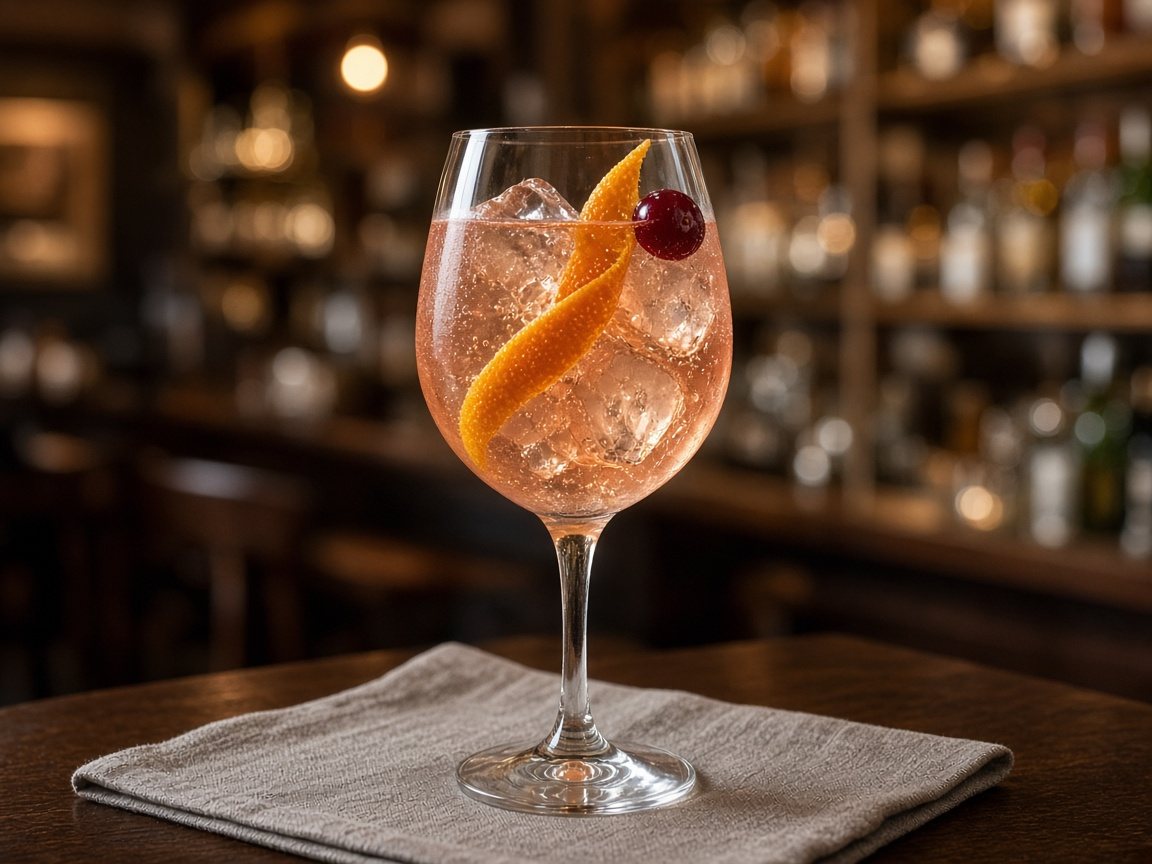
My go-to build: cranberry or pomegranate juice, sparkling water (or NA sparkling wine if they have it), ice, a long orange peel, optional cherry. Looks like a spritz, drinks light. Full recipe below.
4. Soda water + cranberry or pomegranate
Say: “Sparkling water with a splash of cranberry in a wine glass.” Add orange peel if they have citrus. Instant wine-bar costume.
5. White grape + soda
When the juice options are thin: white grape juice topped with soda water and an orange twist. Soft, grape-y, and very wine-adjacent.
6. Mocktail twin of a classic
If they have a bitter NA aperitif, ask for a stirred no-groni on ice. Full recipe: non-alcoholic negroni. Or browse mocktail versions of popular cocktails so you can name the twin of whatever your table is ordering.
7. House sodas, shrubs or NA aperitifs
Some wine bars quietly stock craft sodas, vinegar shrubs or zero-proof aperitifs. Ask “what do you have that’s non-alcoholic beyond water?” before you settle for plain soda.
8. Espresso drinks or tea (caffeine heads-up)
Plenty of wine bars also do coffee. Espresso, iced tea and many colas contain caffeine. If you’re winding down, stick with sparkling water, juice spritzes or NA wine.
NA beer and NA wine: what the labels actually mean
This section is the label decoder I wish someone had handed me earlier. It covers both wine bars and breweries, so keep it bookmarked with my What to Order at a Brewery post.
NA wine and dealcoholized wine
- Under FDA compliance policy for dealcoholized wine, the terms “dealcoholized” or “alcohol-removed” should appear in the statement of identity, followed by a declaration that the product contains less than 0.5 percent alcohol by volume. FDA does not object to an additional “non-alcoholic” claim, but “non-alcoholic” should not replace “dealcoholized” or “alcohol-removed” as the sole qualifier. (FDA CPG Sec 510.400)
- “Alcohol-free” may be used only when the product contains no detectable alcohol. FDA does not treat “non-alcoholic” and “alcohol-free” as synonyms. (same FDA CPG)
- Wines under 7% ABV are generally outside FAA Act wine labeling (27 CFR part 4) and follow other TTB Internal Revenue Code labeling plus applicable FDA food labeling. Overview: TTB wines less than 7% ABV.
NA beer / malt beverages
- On malt beverage labels, “non-alcoholic” may be used only if the statement “contains less than 0.5 percent (or .5%) alcohol by volume” appears immediately adjacent. (TTB malt beverage alcohol content labeling)
- “Alcohol free” may be used only on malt beverages containing no alcohol. (same TTB page)
- TTB’s Feb 2026 Low/No Alcohol Products presentation summarizes the same split: in that deck, “non-alcoholic” describes products with less than 0.5% ABV, and finished beverages under 0.5% ABV are generally not treated as alcohol beverages for federal tax purposes, with product-specific exceptions. (TTB Low/No Alcohol Products presentation, Feb 2026, PDF)
Quick checks before you sip
- NA ≠ 0.0. “Non-alcoholic,” “dealcoholized,” and “alcohol-removed” can still mean up to just under 0.5% ABV. Look for “alcohol-free” or a printed 0.0% if you want as close to zero as possible.
- Gluten in beer: most NA beers are still brewed with barley or wheat, so they contain gluten unless labeled gluten-free.
- Bitters contain alcohol: aromatic bitters are alcohol-based. A dash or two is a tiny amount, but it is not zero. Say “no bitters” if you avoid all alcohol.
- Hard vs soft: hard cider, hard seltzer, hard kombucha and hard ginger beer are alcoholic. When in doubt, ask to see the can or bottle.
- Sulfites: many wines (including some NA wines) contain sulfites. If you react to them, ask to see the label.
- Your call: some people who don’t drink skip NA wine and NA beer because they taste so close to the real thing. Do what feels right for you.
Allergen and caffeine cheat notes
- Caffeine: as written, the Cranberry Orange Wine Spritz below is caffeine-free. Espresso, iced tea, cola and many energy drinks at the same venue are not.
- Tree nuts: orgeat and nut syrups show up more at cocktail bars than wine bars, but say something before they start if you have a nut allergy.
- Dairy: cheese boards are dairy; cream floats are not typical wine-bar drinks, but coffee drinks with milk are.
- Cherries / garnish: fresh cherries are fine for most people; some jarred cocktail cherries use artificial colors or preservatives. Skip the garnish or ask what they use if that matters to you.
- Sulfites: common in wine and some NA wines. Ask for the bottle if you need to check.
- Gluten: NA beer usually has it unless labeled gluten-free. Wine and the spritz recipe below do not rely on gluten ingredients.
- Grapefruit: if a bartender offers grapefruit instead of cranberry, know that grapefruit juice can interact with some medications. Stick with cranberry, pomegranate or orange if that’s you.
My wine-bar game plan
- Order first, before the bottle list becomes a group project.
- Ask for a real wine glass. The glass does half the social work.
- Want a salted or sugared rim for a home version? Here’s how to rim a glass.
- Hosting the next one at home? Use how to set up a mocktail bar.
- Tip like you would on a glass of wine. Same glassware, same pour, same work.
- Someone asks why you’re not drinking? Here are 4 simple ways to answer.
Download the printable wine-bar order card (PDF) for your wallet or phone screenshot.
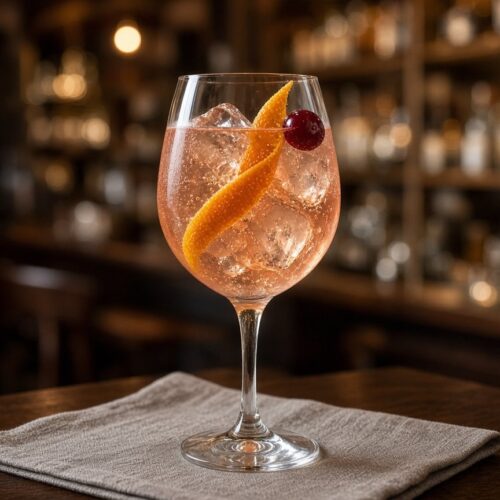
Cranberry Orange Wine Spritz
Ingredients
- ice enough to fill a large stemmed glass
- 2 oz cranberry juice 1/4 cup; 100% juice if you have it, or cranberry juice cocktail for a sweeter pour. Pomegranate juice also works for the same pale pink
- 4 oz non-alcoholic sparkling wine 1/2 cup, well chilled. No NA sparkling wine? Use 2 oz white grape juice + 2 oz sparkling water instead
- 1 orange peel a long, thick strip of peel (avoid most of the white pith); twist over the drink, then drape it in
- 1 dark red cherry fresh or jarred cocktail cherry, for the rim or dropped in
- 2 oz sparkling water 1/4 cup, optional top-up if you used NA sparkling wine and want it lighter; skip if you already used the white grape + sparkling water swap
Instructions
- Fill a large stemmed wine glass with ice.
- Pour in the cranberry juice.
- Tilt the glass and slowly pour in the non-alcoholic sparkling wine (or the white grape juice, then the sparkling water) so it stays fizzy.
- If you used NA sparkling wine and want a lighter spritz, top with the optional sparkling water and give one gentle stir.
- Twist the orange peel over the glass to express the oils, then drape the peel in the glass.
- Perch the dark red cherry on the rim (or drop it in) and serve right away while it is cold and sparkling.
Notes
Sources
I only use facts I can point to. Here’s where the label rules on this page come from:
- Dealcoholized / alcohol-removed wine labeling; contains less than 0.5% ABV; “alcohol-free” only with no detectable alcohol; “non-alcoholic” OK as an additional claim: FDA CPG Sec 510.400
- “Non-alcoholic” and “alcohol free” malt beverage label terms (less than 0.5% ABV vs no alcohol): TTB malt beverage alcohol content labeling
- Labeling overview for wines under 7% ABV (FAA Act part 4 does not apply; IRC + FDA food labeling apply): TTB wines less than 7% ABV
- Low / no alcohol product terms and federal overview: TTB Low/No Alcohol Products presentation (Feb 2026, PDF)
Spot something out of date? Use the contact page and I’ll fix it. This guide was last updated November 7, 2026.